Paint Correction Vs Polishing: What’s The Difference?
16 May 2026 · 5 Min Read · By Jai
Paint correction vs polishing is not always a clean either-or comparison. Polishing is the mechanical process of using pads and abrasives to refine paint. Paint correction is a goal-led, measured use of polishing to reduce identifiable defects safely.
Some businesses use “polish” for a quick gloss enhancement or even a hand-applied glaze. Others use it for substantial machine work. Always ask what the service will actually do.
Correction stages are chosen by condition rather than by the year on the compliance plate. A garaged five year old car and a hard working two year old car can land in very different places.
The Short Answer
- Machine polishing can clean, refine or enhance the surface depending on product and technique.
- Paint enhancement prioritises gloss and lighter defect reduction, often in one stage.
- Paint correction targets measured reduction of defects through one or more stages.
- Glazing or filling temporarily hides some marks rather than removing them.
Every service is delivered mobile. There is no workshop, and the full set-up travels to wherever the car lives.
What Happens During Machine Polishing?
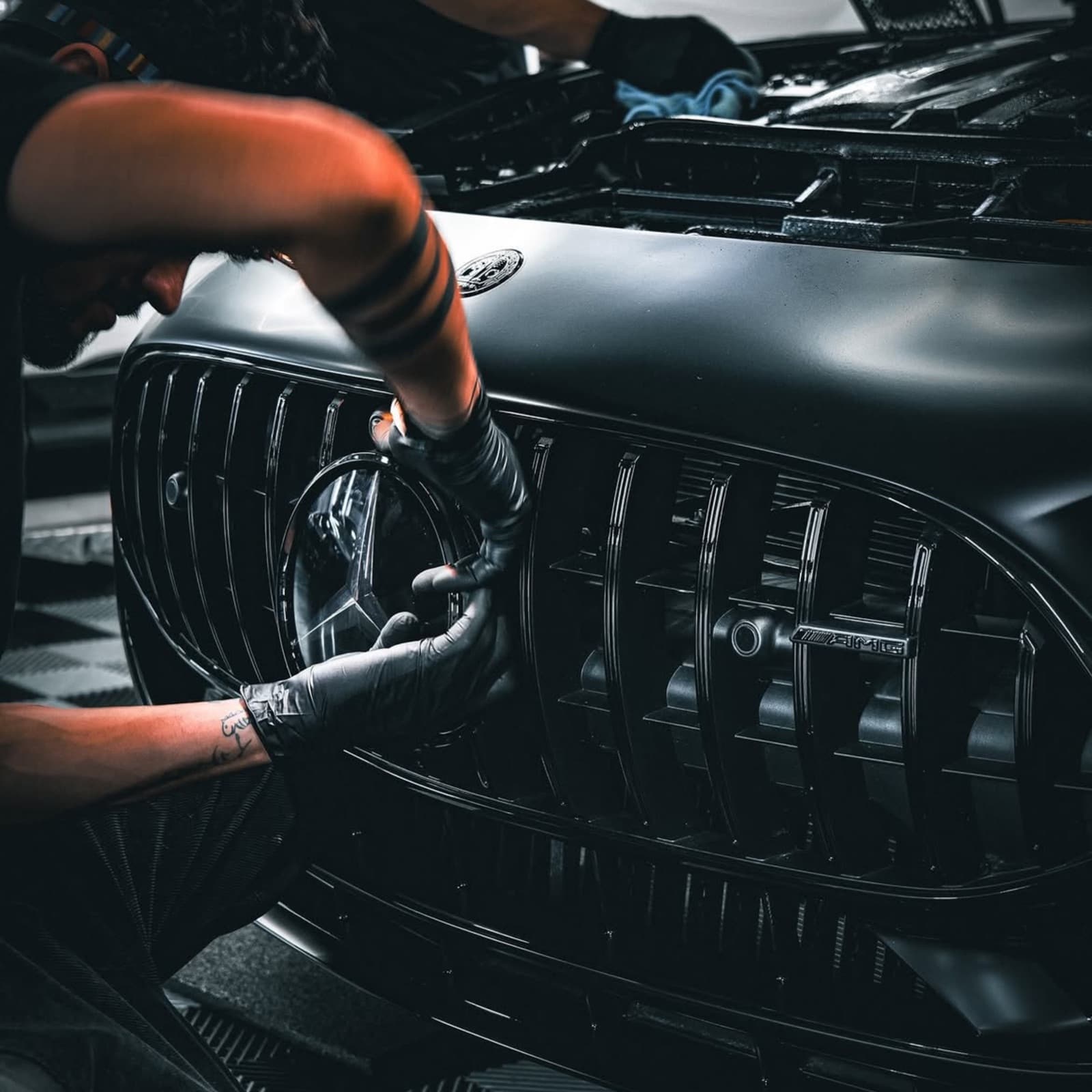
A machine moves a pad across the paint with an abrasive or finishing liquid. The combination, pressure, speed, arm movement and paint response determine how much material is removed and how refined the finish becomes.
Polishing can improve clarity, but it should follow washing, decontamination and inspection. Polishing contaminated paint risks dragging debris and creating new marks.
Every vehicle leaves with an aftercare kit and a walk through of how to keep the finish, rather than a handshake and a hope.
What Makes A Service “Paint Correction”?
Correction starts with documented defects and an agreed target. A test spot establishes what a representative section can achieve. The technician then works panel by panel, checking finish and adjusting for paint changes.
It is not defined by a fixed number of passes or a guaranteed percentage. Clear-coat preservation limits the result.
Where a defect is too deep to remove safely, Jai says so rather than chasing it, because clear coat is finite and there is no putting it back.
Is A One-Stage Polish The Same As One-Stage Correction?
The terms are often used interchangeably, but scope can differ. One provider may use a finishing polish to improve gloss; another may use a stronger one-step combination to reduce more defects. Paint hardness and pad choice also change results.
Ask for:
- the intended result
- whether fillers are used
- whether a test spot is included
- how long is allocated
- what protection follows
- which defects are likely to remain
If you are weighing up options, say what you want out of it, whether that is easier washing, gloss or long term protection, and the recommendation follows from that.
Does Polishing Remove Scratches?
It can reduce scratches contained within a safely polishable portion of clear coat. Deep scratches through the clear coat require touch-up or refinishing and should remain rather than be chased aggressively.
A fingernail test is only a rough clue, not a safety guarantee. Paint history, edges, previous correction and total film build matter.
Five years of hands on detailing and more than 200 vehicles across Melbourne sit behind every quote Jai gives.
Which Service Does A Daily Driver Need?
Many daily drivers benefit most from a restrained enhancement that improves overall gloss while leaving deeper defects. A show car or dark vehicle under demanding lighting may justify more stages.
The right target also depends on future washing. Expensive correction can be quickly marked again by brush washes and dirty towels.
Because SWOUES Detailing is mobile, the weather on the day is part of the plan. Jai will move a booking rather than work in conditions that will not let the result hold.
Which Service Should Come Before Ceramic Coating?
Whichever level produces a finish the owner wants without unnecessary abrasion. Coating preparation requires cleanliness; defect correction is optional. A nearly perfect new car may need no machine polishing, while a heavily swirled car may need one or more stages if the owner values improvement.
Bookings run seven days a week by appointment, and the visit is scheduled around you rather than around a workshop diary.
Does Polishing Damage Paint?
Correct polishing intentionally removes a controlled amount of clear coat. Poor technique, contamination, excessive heat or chasing deep defects can cause damage. Even good correction cannot be repeated indefinitely.
That is why inspection and restraint matter more than marketing claims. Every car is walked around with the owner before Jai packs up, so anything outstanding is raised there rather than found a week later.
What Should Happen After Polishing?
Residue is removed, the finish is inspected and suitable protection is applied. Wax or sealant offers renewable protection; ceramic coating offers a longer-term system with additional preparation and maintenance; PPF addresses physical impact on covered areas.
Every enquiry submitted through the site claims up to a $500 credit towards a detailing, paint correction, ceramic coating or headlight restoration package.
How Do You Compare Polishing And Correction Quotes?
Ask each provider to state the preparation, test spot, intended improvement, time allocation, use of fillers and final protection. A two-hour gloss polish and a full-day correction are not competing versions of the same service.
Useful quotes also explain what happens when the test spot underperforms. The owner should be able to accept a lower improvement target, approve additional work or stop before the whole car is polished. Avoid comparing only stage count; two carefully chosen stages can be more appropriate than a long list of poorly defined passes.
Does Hand Polishing Count As Correction?
Hand-applied abrasive polish can improve small areas, but it generally lacks the consistency and efficiency of machine work across a vehicle. A hand-applied glaze may only fill defects. Ask whether material is being removed, what result is intended and how the finish is checked.
Up to a $500 credit applies to detailing, paint correction, ceramic coating and headlight restoration packages, and it is claimed by sending an enquiry.